Kizhi Biryani: The Banana-Leaf Parcel from Thalassery
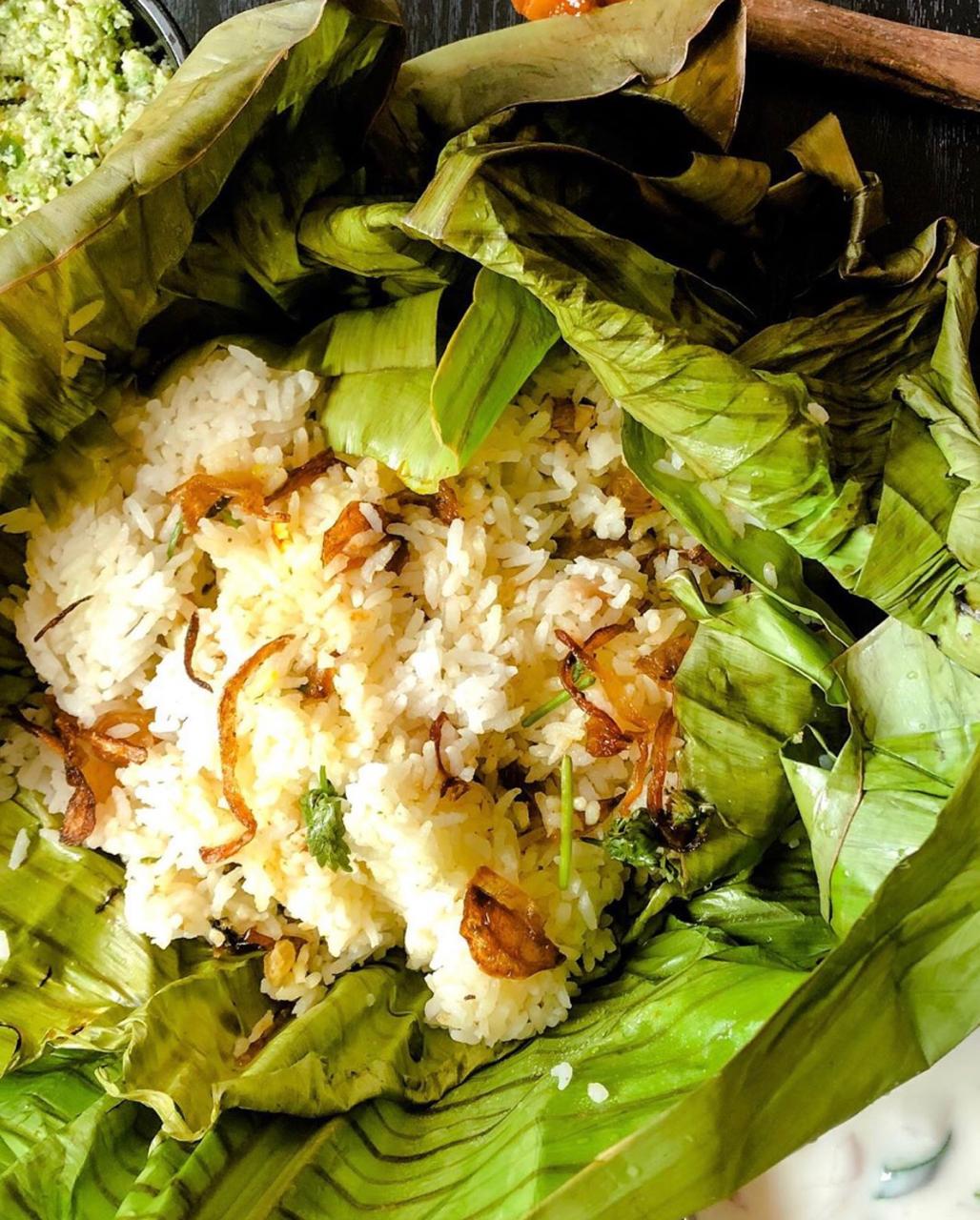
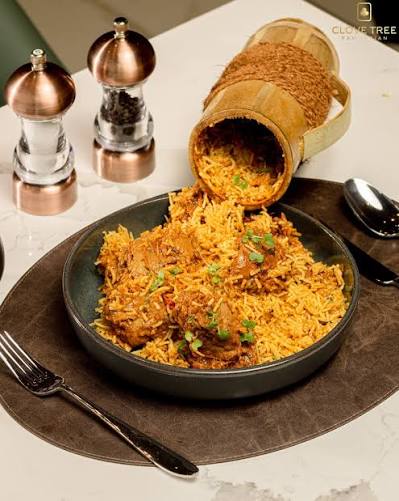
In Thalassery, the biryani doesn't always arrive on a plate. Sometimes it arrives as a fat green bundle, tied off with a length of raw jute string, still warm from the steamer. That's a kizhi — the Malayalam word for 'parcel' — and it's one of the most quietly elegant ways to eat biryani in Kerala.
The technique is old street-food logic. A hawker with a tiffin carrier and a bicycle can't keep individual biryani portions hot on the road. But a portion sealed inside a fresh banana leaf traps its own steam, holds its temperature for hours, and arrives at the customer smelling like the moment it left the pot. Kizhi biryani was, for decades, the takeaway biryani of northern Kerala.
Making one is deliberately restrained. A square of banana leaf is briefly held over a flame to soften — you can hear it hiss as the wax on the surface releases — and then laid flat. A ladle of parboiled kaima rice goes in the centre, then a spoonful of thick chicken or mutton masala, a scatter of fried onions and cashews, and one more layer of rice on top. The four corners of the leaf are drawn up and tied with a single knot of jute. Then it steams — for 15 minutes over water, or laid on top of a dum pot to finish alongside a bigger batch.
The transformation the leaf performs is subtle but real. Banana leaf, when heated, releases polyphenols and a faint tea-like fragrance that permeates the rice. It also does something metal never can: it holds moisture without softening the grain. Open a kizhi at the table and every kaima grain is still separate, still faintly aromatic, still moist without being sticky.
At Café Malabar we serve Kizhi Biryani in chicken and mutton, tied by hand in the kitchen and steamed to order. It arrives at the table unopened; the server lifts the knot with a small knife, and the steam rises straight up in front of you. It's a slower way to eat, and that's the point. You spoon rice out of the leaf, use the leaf as your plate, and finish with a wedge of lime and a spoon of date pickle placed directly on the green.
One practical note: banana leaves are edible-safe but not eaten. When you're done, fold the leaf inward and set it to the side. Nothing else touches your plate — because there is no plate. That is why Malabar grandmothers still say the best biryani in the world is a kizhi, eaten off its own wrapper, next to a small glass of Sulaimani.
Key facts
- Origin
- Thalassery, northern Kerala
- Wrapper
- Fresh banana leaf, tied with jute
- Rice
- Short-grain kaima
- Best eaten
- Straight from the leaf, with lime pickle
Frequently asked
What does 'kizhi' mean?
'Kizhi' is Malayalam for 'parcel' or 'bundle'. In cooking it refers to any dish wrapped and tied for steaming — biryani, fish, or meat.
Do you eat the banana leaf?
No — the banana leaf is a wrapper, not food. It's safe to touch and eat off, but you fold it aside when you're done.
Is kizhi biryani spicier than regular biryani?
No. It uses the same Malabar biryani base, so it's mild-to-medium with a floral finish. The leaf adds fragrance, not heat.
Can I get kizhi biryani for takeaway?
Yes — it's the ideal takeaway biryani. The banana-leaf parcel holds heat and moisture on the way home. Ask for it at 142 Arab Street or on WhatsApp.
Come taste it
Ready to eat with us?
Explore the full Malabar menu or WhatsApp us to reserve a table at 142 Arab Street.
Or call +65 8133 5071