A First-Timer's Guide to Malabar Biryani
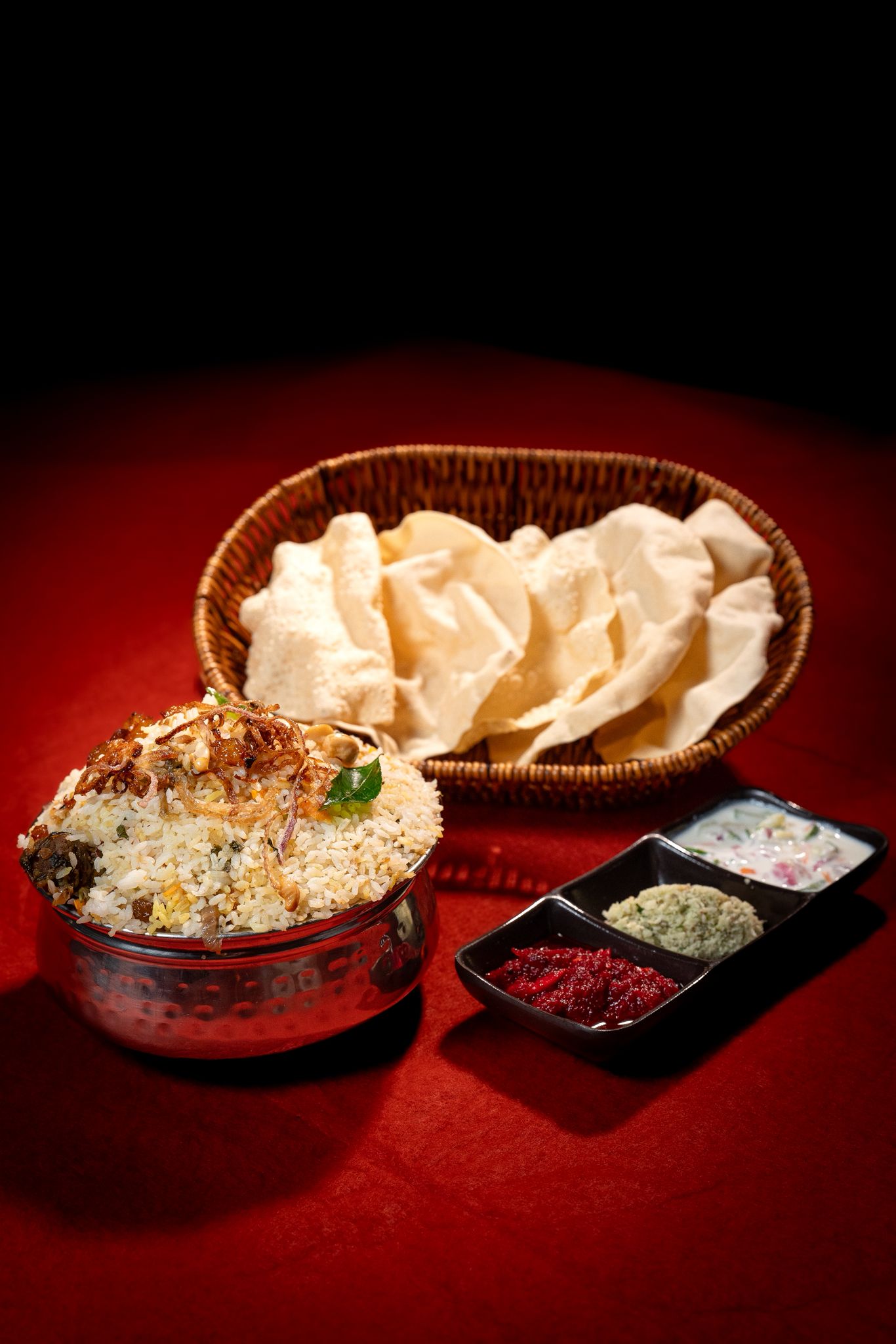
If you've eaten biryani in Hyderabad, Lucknow or Karachi, the biryani we serve at Café Malabar will feel familiar but read a little differently — quieter on the palate, shorter in the grain, more perfumed than fiery. That is by design. What we cook is Malabar biryani, the style perfected in the port town of Thalassery on Kerala's northern coast, and it plays by its own rules.
The first rule is the rice. Most Indian biryanis are built on long-grain basmati, prized for the way each grain fluffs and separates. Malabar biryani uses kaima (also called jeerakasala or 'seeraga samba' in Tamil Nadu) — a short, fat, aromatic grain that soaks up the meat's stock without breaking apart. Bite into a kaima grain and it has a slight chew, almost like a small pearl of pasta, which is why Malabar biryani feels heartier bite-for-bite than its northern cousins.
The second rule is layering. The meat — chicken, mutton, or beef — is first cooked down into a thick masala with shallots, ginger, garlic, garam masala, curry leaves and coconut oil. The rice is parboiled separately with whole spices and a spoon of ghee. Only then do the two meet, in alternating layers inside a heavy pot, with a scatter of fried onions, cashews, raisins and a splash of rose or kewra water between each layer.
The third rule is dum. The pot is sealed — traditionally with a rope of chapatti dough pressed around the lid — and set over the lowest possible flame for 25 to 40 minutes. Inside, the trapped steam finishes cooking the rice, drives the masala upward through every layer, and welds the whole dish into one aromatic column. Break the seal at the table and the escaping steam is half the theatre.
There's a fourth, quieter rule too: restraint. Malabar biryani is not a chilli-forward dish. The heat sits at the back, the front of the palate is all shallot sweetness and warm spice, and the finish is floral from the rose water. This is why it pairs so beautifully with a sharp raita, a spoon of date-and-lime pickle, and a small glass of Sulaimani tea to cut through afterwards.
At Café Malabar we serve the classic Signature Dum Biryani in three proteins, but we also cook two Malabar variations you may not have met before. The Bamboo Biryani is layered and steamed inside a length of green bamboo, sealed with banana leaf — the bamboo's sap perfumes the rice with a green, almost citrus note. The Kizhi Biryani takes the opposite approach: rice, meat and masala are tied into a banana-leaf parcel and steamed until the leaf gives up its own grassy fragrance. Both arrive at the table sealed, and both reward the diner who opens them slowly.
For a first visit, we'd suggest sharing one Signature Dum Biryani between two, adding a small plate of Beef Ularthiyathu on the side, and finishing with a pulled chaya. That is how a Thalassery family would eat it on a Friday afternoon — no ceremony, no hurry, just the rice, the meat and the tea, in that order.
Key facts
- Origin
- Thalassery, northern Kerala
- Rice
- Kaima / Jeerakasala (short-grain)
- Spice level
- Mild-to-medium, floral finish
- Best paired with
- Sulaimani tea, date-lime pickle
Frequently asked
Is Malabar biryani spicy?
No — it's mild-to-medium. The chilli sits at the back of the palate and the finish is floral from rose or kewra water, not fiery.
What rice is used in Malabar biryani?
Short-grain kaima (also called jeerakasala). It's fatter and chewier than basmati and holds the meat stock without breaking.
Is the biryani at Café Malabar halal?
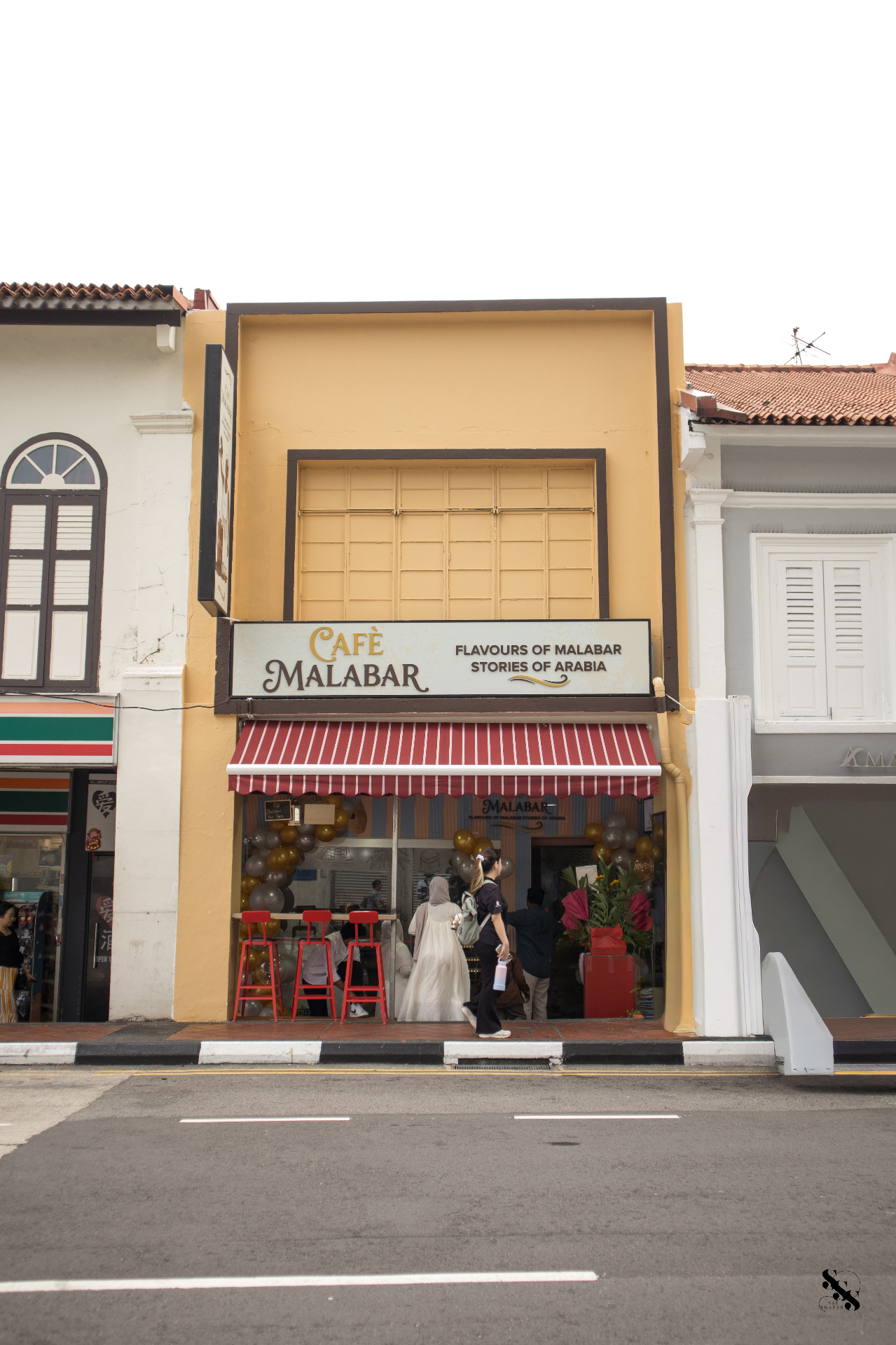
Yes. All meat served at Café Malabar, 142 Arab Street, Singapore, is halal-certified.
Which biryani should a first-timer order?
Start with the Signature Dum Biryani (chicken or mutton). Return for the Bamboo or Kizhi biryani once you know the base flavour.
Come taste it
Ready to eat with us?
Explore the full Malabar menu or WhatsApp us to reserve a table at 142 Arab Street.
Or call +65 8133 5071